Americana Hotel
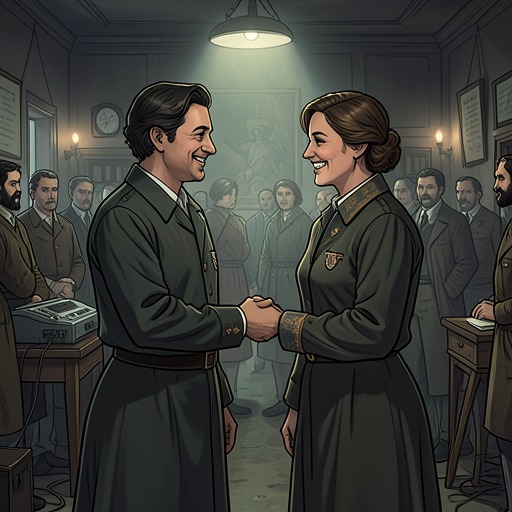
Mr. & Mrs. SmithThe Americana Hotel in Bogotá is where Jane Smith and John Smith first meet, six years before the marriage crisis that becomes the novel’s central conflict. As political violence spills into the streets, its lobby offers the pair temporary shelter; the rooms then become the threshold where flirtation gives way to a shared struggle for safety. The hotel is both a refuge from public chaos and the stage for the private fiction that brings the couple together.
Setting and First Encounter
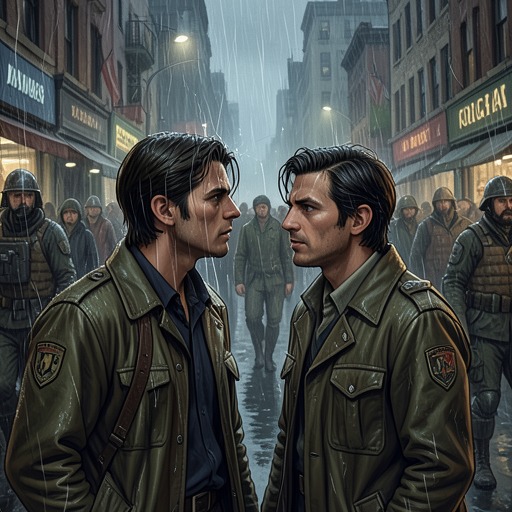
Jane is staying at the Americana Hotel for work, describing her assignment as routine even as Bogotá is engulfed by upheaval. Politicians are being murdered, soldiers regularly storm buildings, and police raid rooms. When news spreads that Sancho Varrón, known as the Barracuda, has been shot, people flee screaming into the streets. Jane, aware that her dark hair and excellent Spanish cannot disguise her conspicuously American tourist clothing, makes her way through the frightened crowd and dives back into the hotel.
In the lobby’s cool darkness, she sees John sitting at the bar and watching the turmoil outside with the composure of someone observing a parade. His battered copy of Let’s Go: South America, used as a coaster, helps Jane take him for an American businessman or tourist. Her immediate fascination with him makes the encounter feel less like a routine interruption than the beginning of a new story. The hotel joins an unstable city outside to a seemingly self-contained moment of attraction inside.
The Lobby as a Stage for Deception
The hotel lobby is not simply a place to wait out the unrest. After the assassination news reaches John, a bellboy warns him in Spanish that police are arresting tourists who travel alone. Jane and John respond by performing the appearance of a couple: the pretense helps them evade the danger attached to being unaccompanied foreigners. Their alliance begins as a practical disguise, but the performance also gives each of them an excuse to approach the other.
At the bar and in the hotel’s public spaces, the difference between what the pair show and what they feel becomes part of the scene’s energy. Their apparent intimacy is initially a tactic, yet Jane’s account makes clear that attraction accompanies it. The hotel therefore establishes a pattern that will recur in their relationship: a shared role can provide protection while concealing the deeper truths of the people inhabiting it.
From Public Shelter to Private Refuge
Jane and John keep up their pretense until they reach Jane’s room, where she assumes the game will end. Instead, a volley of gunfire changes the immediate stakes. They dive inside, shut the door, and sit beside each other with their backs against it, listening to screams, shots, and heavy footsteps. The room offers only a fragile barrier against the violence outside; their hope is simply to be among those who survive it.
Jane expects her supposed companion to scream, faint, or break into tears. The threat instead binds them together in a moment of uncertainty, turning a flirtatious cover into shared exposure to danger. The contrast between the hotel room’s enclosed privacy and the armed chaos beyond its door gives their first encounter its decisive shape: intimacy begins not in safety, but in an improvised refuge whose protection neither can take for granted.
The Hotel in the Recalled Courtship
The hotel reappears in the couple’s competing recollections of how they met. Jane places the encounter six years earlier and recalls seeing John in the lobby; John’s version similarly begins with him at the Americana Hotel bar as the news of the Barracuda’s shooting reaches him. The accounts differ in emphasis and detail, but converge on the same setting and crisis. The hotel becomes an anchor for a shared origin story, even as the act of remembering exposes how each spouse narrates that beginning from a different point of view.
Jane later wakes in her room to the sound of a key turning in the lock and wonders whether the police have returned. Instead, John stands in the doorway, present again after the dangerous night. Their brief greeting gives the hotel encounter a continuation beyond the first burst of attraction and gunfire: the stranger from the lobby has come back, and the two are now able to meet outside the immediate emergency. The room’s door marks the movement from chance proximity to renewed personal contact.
A Place Reframed by Later Events
The hotel’s significance in the novel depends on its contrast with the couple’s later life. Its initial rooms hold a provisional alliance built under pressure, whereas their married household becomes a site where affection, resentment, and concealed professional lives collide. Domestic irritations can carry the same comic disproportion as the hotel’s danger: a disagreement over salted butter, for example, turns John into a knight unable to satisfy an ice princess. The mundane complaint and the armed crisis belong to different registers, but both reveal how the Smiths’ outward performances can mask a more difficult private reality.
Later action scenes sharpen that collision between ordinary objects and lethal danger. John destroys Jane’s cherished teapot and kettle during their violent confrontation at home; a small grenade, compared to a toy from a Happy Meal, proves to be no toy at all. At a home-goods store, a life-size mascot called Homey erupts from a teddy-bear bin with a sawed-off shotgun, transforming what was supposed to be a skirmish into a public event. These episodes do not take place at the Americana Hotel, but they echo the hotel’s original mixture of the familiar and the dangerous: an ordinary setting becomes a stage for violence, while the couple’s capacity to perform and improvise remains essential to survival.
The hotel’s defining function is thus concentrated in the couple’s beginning. It shelters them briefly from Bogotá’s upheaval, brings them into view of one another, and provides a room where a false courtship becomes an actual shared ordeal. Remembered from the vantage of their troubled marriage, that refuge is neither a simple romantic idyll nor merely an action set piece. It is the first place where danger, attraction, and disguise converge in the story of Jane and John Smith.